
Category: AI & Automation
Date: April 7, 2026
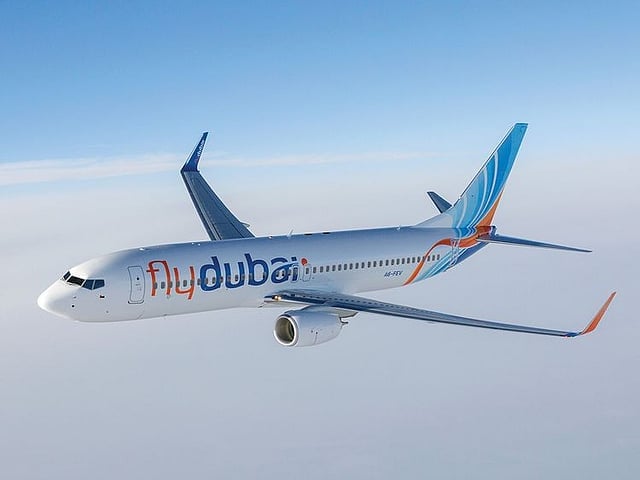
Flydubai operates 100+ daily flights across a growing route network. When delays hit, the impact cascades — connecting flights are disrupted, passengers flood the call center, and ground operations scramble to respond. We built an end-to-end ML prediction system that sees delays before they happen and triggers proactive action across operations, customer comms, and call center staffing.

Airline delays are not isolated events — they propagate through the network. A late inbound aircraft from Karachi means the outbound flight to Riyadh using that same aircraft will also be delayed. This is called network delay propagation, and it’s the root cause of most cascading disruptions.
We designed a three-stage prediction pipeline that transforms raw flight and environmental data into actionable intelligence — minutes to hours before delays materialize.
The core ML system predicts both whether a flight will be delayed (classification) and by how much (regression), for every flight in the network.
We engineered 80+ features across five categories:
| Category | Features |
|---|---|
| Flight Features | Flight number, route, aircraft type, scheduled departure/arrival time |
| Weather Signals | Real-time weather at origin + destination (wind, visibility, precipitation, thunderstorm probability) |
| Airport & Ops | Runway capacity, ground handling status, terminal congestion, ATC restrictions |
| Time-Based | Day of week, hour of day, seasonality (Ramadan, school holidays, Eid), historical delay patterns per slot |
| Network Features | Previous flight delay (same aircraft), turnaround time, inbound flight status, aircraft rotation chain |
Network features were the single most important predictor — knowing that the inbound aircraft is already 40 minutes late gives the model a strong signal for the outbound departure delay.
This is where the real business value kicks in. Once we know a delay is coming, we predict the downstream customer impact:
| Flight | Predicted Delay | Passengers | Expected Calls | Action |
|---|---|---|---|---|
| FZ123 DXB→KHI | 60 min | 189 | ~250 calls | Add 8 agents + send SMS |
| FZ456 DXB→RUH | 15 min | 174 | ~20 calls | No action needed |
| FZ789 DXB→IST | 90 min | 215 | ~380 calls | Add 12 agents + auto-rebook connecting pax |
The call volume model uses: predicted delay duration × passenger count × route sensitivity × loyalty tier distribution × time of day to forecast incoming call center load with high accuracy.
Predictions drive automated workflows across the organization:

| Metric | Before | After |
|---|---|---|
| Delay Prediction Accuracy | N/A (reactive) | 87% (30-min window) |
| Proactive Customer Notification | 0% | 78% of affected passengers notified before gate |
| Call Center SLA Compliance | 62% during disruptions | 91% during disruptions |
| Delay-Related Complaints | Baseline | -60% reduction |
| Average Call Wait Time (during delays) | 30+ minutes | Under 5 minutes |
| Connecting Passenger Rebooking | Manual (at counter) | 85% auto-rebooked before arrival |
Flight delay prediction is not just an ML problem — it’s a network operations + customer experience system. The prediction model is only 30% of the value. The other 70% comes from what you do with the prediction: proactive comms, automated rebooking, and intelligent staffing. That’s what turns a data science project into a business transformation.
Explore more work from our portfolio.
The UI and user experience exceeded all my expectations. The design ideology is modern, intuitive, and makes sending money feel effortless. Our customers love how easy and secure the entire process is — from sign-up to transfer. Metosys delivered a world-class fintech product in just three months. — Shahid Nadeem, CEO & Product Owner, Best Forex
